 KitDesk
Why equipment goes missing, and the four things that stop it
Kit rarely gets stolen. It gets borrowed by someone who meant to bring it back. Here is what actually reduces the losses.
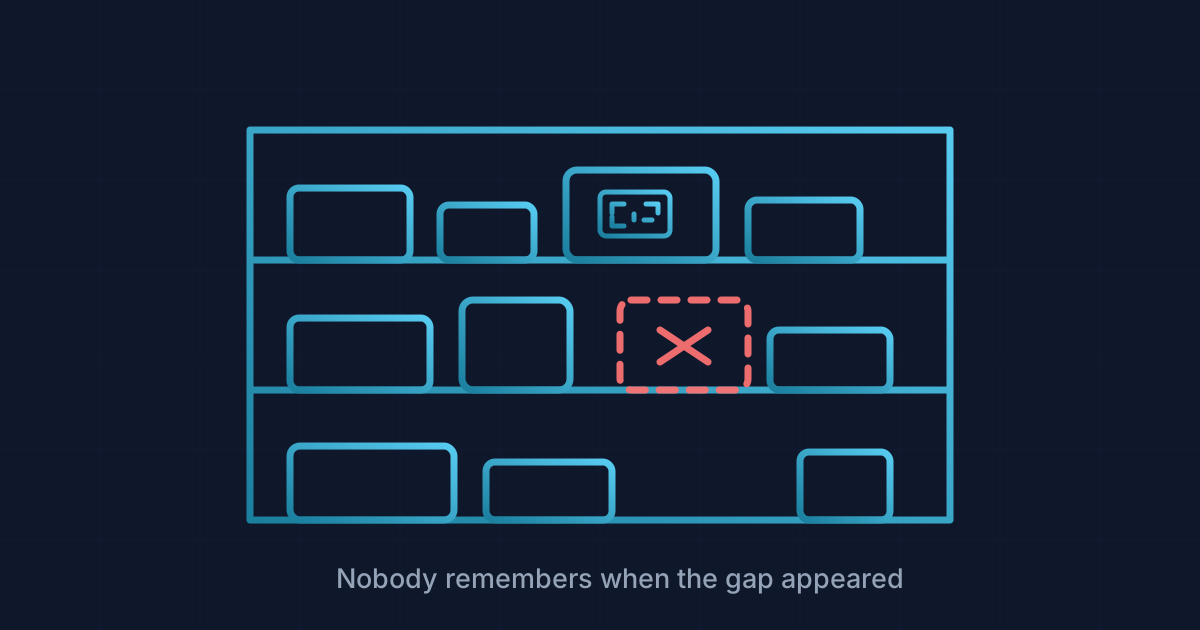
Most equipment does not get stolen. It gets borrowed on a Friday by someone who fully intended to bring it back on Monday, then put in a car boot, then a cupboard at home, then forgotten. Six months later a stocktake finds a gap and nobody can say when it appeared.
That distinction matters, because the fixes for theft and the fixes for drift are completely different. Cameras and locks do nothing about drift. What works is knowing who had it and when it was due.
The four things
1. Every item needs a label with a code on it
Not a description. A code. "The good camera" is not an identity, and neither is "Canon" when you own
three. A short reference like KIT-000042 printed on a sticky label means someone can tell you
exactly what they have over the phone.
QR is the cheapest way to do this. A phone camera reads it, no scanner hardware needed, and a sheet of labels costs pence. Put the label somewhere it will not get peeled off in a bag.
2. Booking out has to take less than thirty seconds
This is the one people get wrong, and they get it wrong in a way that feels responsible at the time: they design a careful process where the person borrowing finds the right member of staff, who opens a spreadsheet on a laptop somewhere else in the building, and types in a description of the item along with a date. It will not happen. Staff will take the projector and mean to write it down later, and later never arrives, because by then they are already in the hall with forty parents walking in.
A tablet by the cupboard with a four digit PIN and a scanner is the difference between a system that gets used and one that gets quietly bypassed by everybody including the person who introduced it. Unlock, scan, say where it is going, walk off.
3. Something has to chase, and it cannot be a person
Nobody wants to be the one emailing a colleague about a tripod. So nobody does, and the tripod stays out.
An automatic reminder the day before something is due, followed by a nudge the day after if it has not come back, removes the awkwardness completely, because the message is not a colleague implying you are unreliable, it is a system sending the same note it sends everyone. The day-before one does most of the work. Late returns are rarely defiance. Someone forgot the date.
4. Somebody has to look at the list
A stocktake once a year is not a system, it is an audit. Walking the shelves once a month with a list of what has not been physically seen recently takes twenty minutes and catches drift while it is still recoverable.
The trick is making the list short. If it shows all 400 items you will not do it. If it shows only the things nobody has laid eyes on in 30 days, it is a handful, and you will.
What this looks like in numbers
A secondary school with 200 items averaging £180 each is holding £36,000 of equipment. Losing 4% a year, which is not unusual for a shared store with a paper sign-out sheet, is £1,440 a year walking out of the door. Cutting that to 1% pays for a lot of stickers.
Insurance rarely helps here. Most policies want you to show the item was secured and that you noticed it was gone, and "we think it went sometime in the spring" fails both tests.
The bit that is not about software
None of this works if the store cupboard has no owner. Somebody has to be the person who actually cares whether the drill came back, and, more importantly, somebody has to have enough standing in the building to send a second email to a head of department who has ignored the first one. Software makes that person's job take minutes rather than an afternoon. It does not replace them, and any product that claims otherwise has never run a store cupboard.
If you are that person, start with labels and the due-date reminder. Those two alone recover most of what you are currently losing, and neither needs a budget meeting.
Tracking equipment the hard way?
KitDesk does the boring part: labels, bookings, reminders and a list of what never came back.
Try the demo